Implant size is the most consequential decision in breast augmentation. Choose too small and you risk dissatisfaction; choose too large and you compromise natural proportion, durability, and long-term skin health. This guide walks through every dimension of the decision — so that when you walk into consultation, you arrive informed.
The first concept: cc, not cup size
Implants are measured in cubic centimeters (cc), not bra cup sizes. Cup sizing varies wildly between brands — the same "34C" feels different across manufacturers. cc is an objective volume.
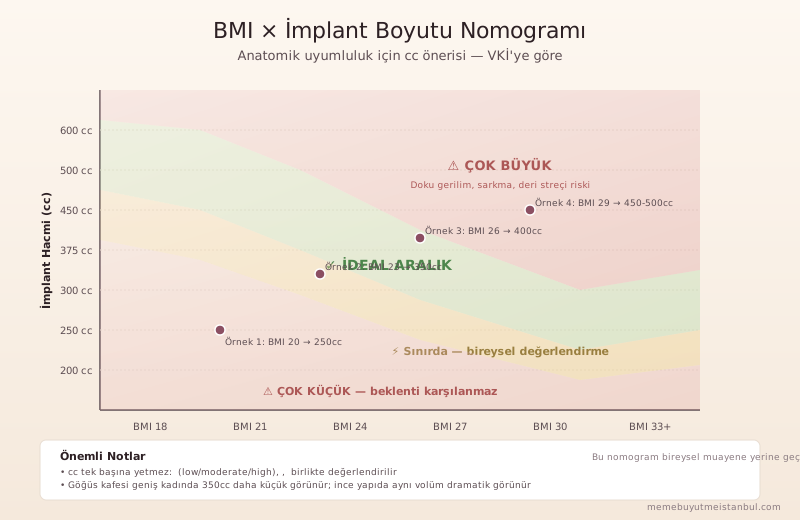
Anatomik uyumluluk nomogramı — bireysel muayene yerine geçmez
| Implant Volume (cc) | Approx. Cup Size Increase | Category |
|---|---|---|
| 150-200 cc | ~1 cup size | Subtle — natural enhancement |
| 200-300 cc | 1-1.5 cup sizes | Modest — natural-looking priority |
| 300-400 cc | 1.5-2 cup sizes | Moderate — most common range |
| 400-500 cc | 2-2.5 cup sizes | Noticeable — fuller cleavage |
| 500-650 cc | 2.5-3 cup sizes | Large — for athletic frames |
| 650+ cc | 3+ cup sizes | Very large — specific anatomy required |
Rule of thumb: every ~150-200cc adds approximately one cup size. The actual ratio varies ±30% based on chest wall width, existing tissue, and skin elasticity.
The decision matrix: what your body type suggests
During consultation, the surgeon takes precise measurements: breast width distance (BWD), existing breast volume, skin elasticity, and anteroposterior projection. These together define the appropriate cc range.
| Body Type | Chest Width | Recommended cc Range | Profile Preference |
|---|---|---|---|
| Petite (5'1"-5'5", 110-130 lb) | 11-12 cm | 225-325 cc | Moderate / High Profile |
| Average (5'4"-5'8", 120-150 lb) | 12-13.5 cm | 275-400 cc | Moderate Profile |
| Athletic / broad shouldered | 13-14.5 cm | 350-500 cc | Moderate / Low Profile |
| Tall (5'9"+), wide frame | 14-15.5 cm | 400-550 cc | Low Profile (wide base) |
Implant profile selection — equally important
The same cc with different profiles produces dramatically different visuals. Profile determines how far the implant projects forward from the chest wall.
Low Profile
Wide base, low projection. Natural look for women with broader shoulders and wider chest walls. Subtle upper-pole, slightly broader appearance.
Moderate Profile
The most commonly chosen profile. Balanced base-to-projection ratio. Suits most body types and produces a natural-noticeable middle ground.
High Profile
Narrow base, high projection. Provides fuller cleavage in petite women with narrow chest walls. Preferred by patients seeking "upper-pole fullness."
Ultra High / Extra Profile
Maximum projection. For very thin breast tissue, dramatic fullness goals, narrow chest base anatomy. Caveat: higher risk of visible implant edges.
Lifestyle factors
Choose your size not only for anatomical fit but for how it integrates into your life:
1. Sport and physical activity
- High-intensity sports (CrossFit, running, yoga, dance): Recommended ceiling around 250-350 cc. Larger implants can cause discomfort during high-impact movement.
- Strength training (weights, fitness): Subglandular (above-muscle) placement + 300-450 cc — avoids pectoral animation. With submuscular at 350+ cc, "moving implant" appearance during movement.
- Low-to-moderate activity: Volume choice unconstrained by lifestyle.
2. Wardrobe and clothing preference
- Loose dresses and blouses: 250-350 cc; natural drape.
- Fitted clothes, low-cut tops: 350-500 cc; upper-pole fullness shapes the neckline.
- Sports bra / bra-free style: 250-300 cc; less weight, less swelling.
3. Future pregnancy and breastfeeding
If pregnancy is planned within 1-2 years, moderate-to-smaller volumes are advised. Pregnancy and breastfeeding cause breast tissue expansion then re-contraction; this cycle creates less distortion in patients who started at moderate volumes. Very large initial implants more often need a later mastopexy.
4. Age and skin elasticity
Younger patients (20-35) have more elastic skin and tolerate larger volumes. In patients 45+, decreased skin elasticity means moderate volumes delay sagging. Very large implants + weak skin = visible sagging within 5-10 years.
Tools used at consultation
1. 3D simulation (VECTRA XT)
Modern clinics use 3D body imaging. A digital model of your body is created, and different cc options are simulated on it. This is the most realistic preview method — you literally see different sizes on yourself.
2. Sizers (trial implants)
Different cc temporary sizers are placed in a sports bra. You evaluate the look in front of a mirror, dressed in your typical clothing. This is the most practical indicator of how a size will look under your wardrobe.
3. The "rice test" (at home)
A practical pre-consultation home test: measure rice volume (200 cc rice ≈ 200 cc implant), place in sandwich bag, slip into a bra. Try candidate cc volumes in front of the mirror. Not perfect, but directionally useful.
Five common mistakes
- "My friend's 350cc looks great — give me the same": Anatomy is entirely individual. 350cc that looks natural on one woman looks excessive on another. The decision rests on chest width and existing tissue.
- "I want one cup size up — how many cc?": Tell your surgeon not what cup size, but what visual you want. Bring reference photos. The surgeon translates that to cc based on your anatomy.
- "Since I'm having surgery anyway, let me go big": Very large implants accelerate sagging, cause back/shoulder pain, thin the skin, and increase capsular contracture risk over time.
- "I'll choose based on the price-vs-cc table I saw online": Cost analysis comes after consultation, not before. Sizing by financial worry leads to aesthetic regret.
- Quick decision in a single consultation: At least two consultations are recommended. The first gathers measurements and a general range; the second uses 3D / sizers to finalize.
Practical sequence — how to actually decide
- Pre-consultation: Collect reference photos (bra-free, standing, silhouettes you like). Try the rice test at home with 2-3 candidate cc volumes.
- First consultation: Surgeon takes BWD, existing volume, skin elasticity measurements. Recommends 2-3 candidate cc options.
- 3D simulation / sizers: See models in the recommended range. Try sizers in a mirror.
- Lifestyle review: Activity, wardrobe, future plans assessed. Candidate range narrowed.
- Second consultation (typically weeks later): After a cooling-off period, final cc and profile decision.
- Written commitment: Pre-surgery contract specifies cc, profile, brand, model. No changes on surgery day.